Why You Need This Checklist
What if the thing that killed your animals in a blizzard wasn't the cold — it was something you assumed you had handled? In January 1978, an Ohio dairyman lost two animals not because he ran out of feed or hay, but because his water plan had a hole in it the size of a frozen trough. His barn was full. His herd still died. That story is not an outlier. According to the National Weather Service, most animals that perish in a winter storm die of dehydration, not cold. Which means the thing most farmers feel confident about — the feed stacked to the rafters — is not the thing that saves the herd when it matters most.
If you've ever stood in a feed store in October wondering whether you're buying the right things, whether you're buying enough, or whether the guy behind the counter is steering you toward what moves margin rather than what keeps animals alive, you already know the gap this checklist fills. The wrong heat lamp setup burns barns. The wrong salt block wastes money. The wrong feed swap throws a ruminant into digestive crisis at the worst possible moment. None of these are secrets. They're just the things nobody at the register has a reason to say out loud.
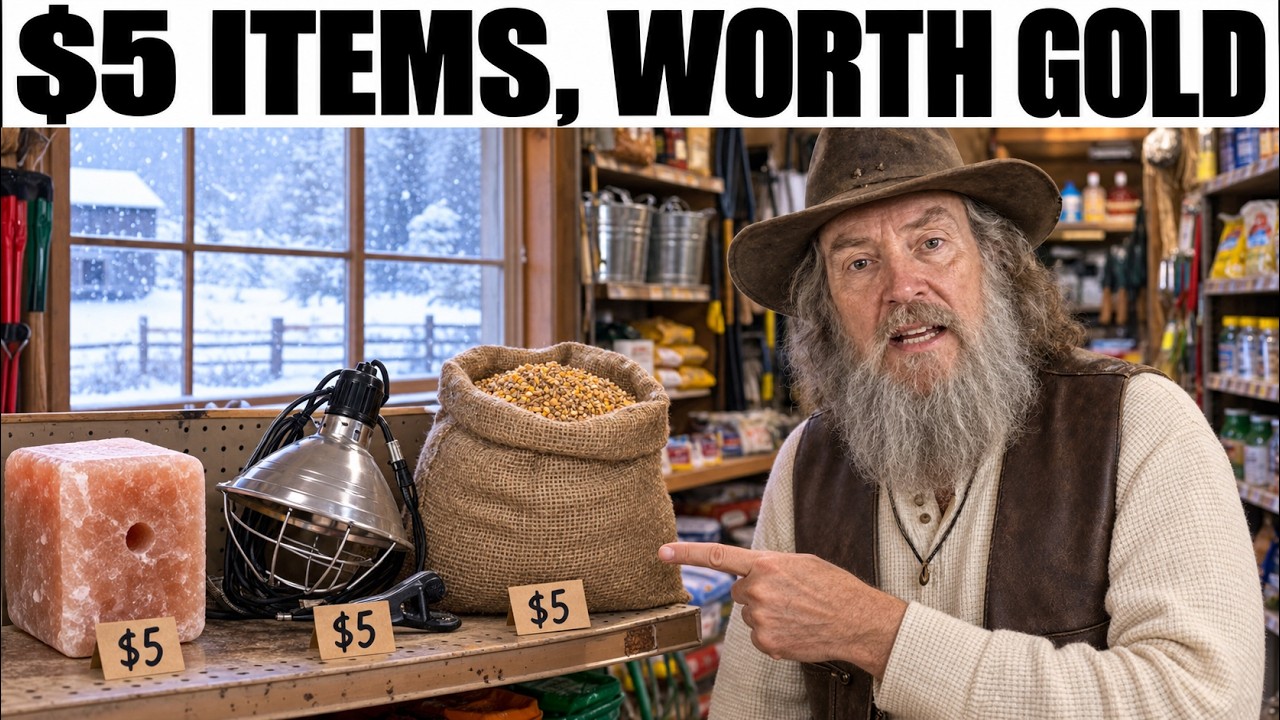
Silas Mercer is a seventh-generation farmer who grew up under the instruction of his grandfather Eli — a man who kept a pantry that held a winter and passed down the kind of knowledge that doesn't make it onto product tags. Silas has distilled that knowledge, cross-referenced with USDA guidance, University of Connecticut Extension livestock emergency protocols, Penn State winter preparedness work, and Mississippi State Extension feeding research, into a list of 15 specific, affordable items any farm can source this week. He breaks down not just what to buy, but what the counter won't tell you about each one — which lamp setup burns barns, which salt block is three times the price for zero extra benefit, and why corn is a tool and not a meal.
This PDF checklist puts every one of those 15 items in your hands in a single page you can tape inside the feed room door. Each item includes exactly what to buy, what to avoid, how much to keep on hand, and the one mistake most farms make with it. Walk through it once in October and you will have closed every gap before the first snow falls. Your animals depend on a human who shows up prepared. This checklist is how you become that person.
What's Inside — Preview
Every checklist item comes with actionable notes to guide you — things like "Don't forget to do this before you start," "Avoid this common mistake," or "Set a reminder for 30 days out." Nothing vague, just clear next steps.
BUY
Stock a 7-day supply of the correct species-specific bagged feed for every animal you own
BUY
Store 3 to 5 days of dry hay up off the ground and under cover before any storm arrives
BUY
Buy a burlap sack of corn kernels only if you understand it is an energy supplement, not a complete meal
DO
Mount any heat lamp with two independent securing points — a clamp AND a chain rated to hold a grown man's weight
PLAN
Establish a written water plan so animals have unfrozen water even if power goes out for 3 or more days
+ 10 more action items inside...
 ▶ Watch the source video on YouTube