Why You Need This Checklist
Ever stared at a misfire code on your scan tool and thought, now what? You replaced the coil, swapped the plug, maybe even the injector — and the code came right back. Sound familiar? You are not alone, and more importantly, you are not out of options.
Here is the brutal truth about P0302 and similar cylinder-specific misfire codes on the Dodge 3.6 Pentastar: a surprising number of them are not ignition problems at all. They are compression problems in disguise. A weak cylinder that barely makes enough compression to fire reliably will behave exactly like a coil on its way out — rough at idle, smooth at cruise, counts misfires slowly on the scanner. If you do not know what to look for, you will keep throwing parts at it until your wallet gives out.
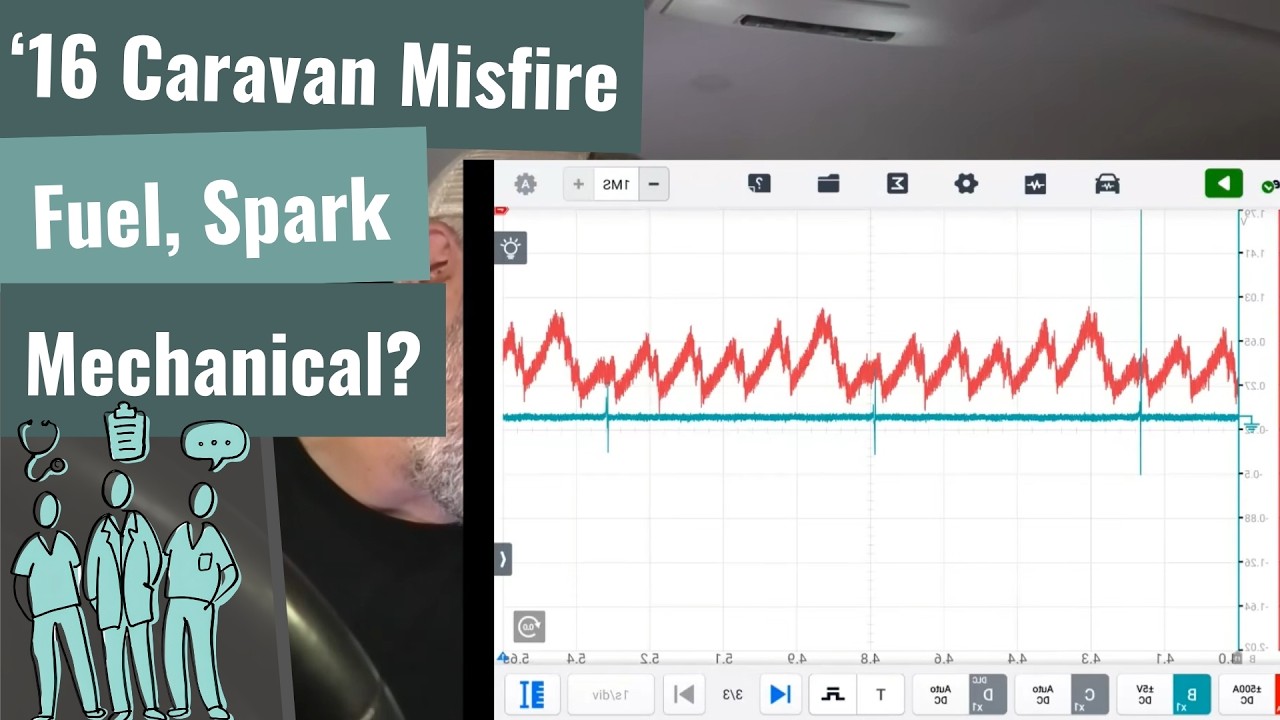
Now imagine this instead. You hook up an amp clamp and an ignition probe, crank the engine for a few seconds, and the oscilloscope tells you exactly which cylinder is soft — in under five minutes, right in the driveway. No cylinder-by-cylinder compression test. No pulling plugs. No guessing. You call your customer, or make your own repair decision, with real data in hand. That is not wishful thinking. That is the relative compression test, and it works every single time when you know how to execute it.
Eric from South Main Auto LLC has built one of the most trusted automotive diagnostic channels on YouTube precisely because he does not waste your time with theory. He shows you real cars, real problems, and real solutions — including this 2016 Dodge Caravan that walked into his shop with a textbook low-contribution misfire and a previous mechanic's fingerprints all over the engine. Eric diagnosed the root cause in minutes using nothing more than a current clamp, an ignition probe, and a scope, then explained every single detail of what the waveform was telling him.
This checklist captures everything Eric covers in that video and organizes it into a clear, repeatable process you can follow on any vehicle. From reading misfire data on the scan tool to setting up your scope, interpreting the current waveform, identifying the low hump that flags the bad cylinder, and understanding the high-hump anomaly that confuses so many techs — it is all here, in order, ready to use.
Whether you are a professional technician looking to add a faster diagnostic workflow or a serious DIYer tired of guessing, this checklist will help you stop wasting money on parts and start making confident, data-driven repair decisions. Download it, print it, and keep it in your toolbox.
What's Inside — Preview
Every checklist item comes with actionable notes to guide you — things like "Don't forget to do this before you start," "Avoid this common mistake," or "Set a reminder for 30 days out." Nothing vague, just clear next steps.
CHECK
Retrieve and record the stored misfire code from the vehicle's ECU before doing anything else
CHECK
Inspect the engine bay for signs of previous repair attempts before touching anything
CHECK
Perform a cold-start observation — start the engine from stone cold and note idle quality
CHECK
Listen carefully during cold start for a camshaft tick or any mechanical knock
DO
Connect a scan tool and navigate to live misfire data — monitor cylinder-specific misfire counts
+ 18 more action items inside...
 ▶ Watch the source video on YouTube