Why You Need This Checklist
What if the ugliest part of your garden — those black plastic tarps baking in the sun — was completely optional? Justin Rhodes, one of the most trusted voices in homesteading and permaculture farming, just proved it might be. And the answer grows itself.
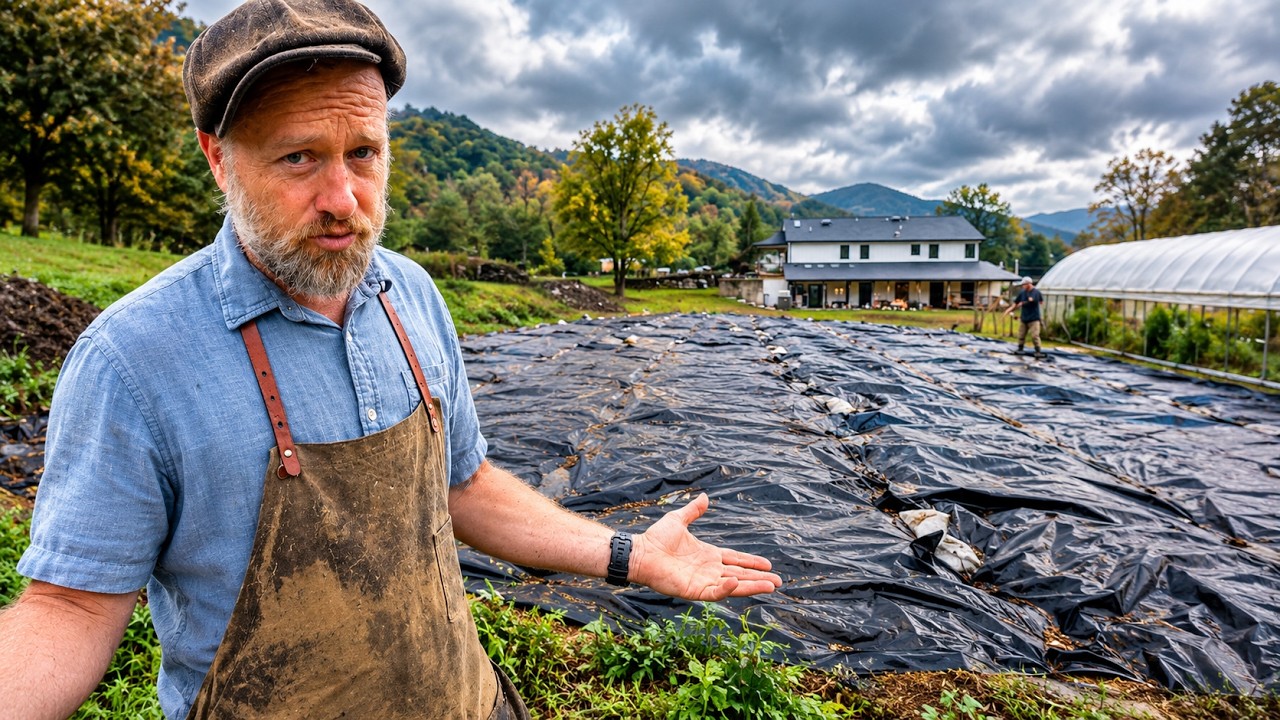
Here's the problem most gardeners face every fall: you've harvested your beds, the soil is bare, weed seeds are waiting underground, and you've got two choices — lay down plastic and hope for the best, or watch the chaos take over by spring. Plastic works, sure. But it also sticks around for 450 years. It gets chewed by mice. It has to be hauled, folded, and stored. And deep down, you know there's something better.
Imagine walking out to your garden in November and seeing a lush, green carpet instead of a sea of black plastic. That's what winter rye does. It germinates down to 34 degrees. It grows even when daylight is short. It chemically suppresses weeds so they can't compete. It breaks up clay soil with its roots. It prevents erosion. And when you're ready to plant in spring, you terminate it and it feeds your beds. It's a living tarp — one that actually improves your soil while it works.
Justin walks through exactly how he pulled this off on his real working homestead — including the rain-timing trick that gets seeds germinating fast, how to handle silage tarps solo, why you sow seeds immediately into wet soil rather than waiting, and the specific cover crop variety that makes this whole system tick. He's done the trial and error so you don't have to.
This checklist distills every actionable step from Justin's video into a clear, printable PDF you can take straight to your garden. From timing your harvest window correctly, to seeding rates, to what to do with your silage tarps in the meantime — it's all here. Whether you're a seasoned homesteader or just tired of fighting weeds every spring, this is the checklist that helps you work smarter by letting biology do the heavy lifting. Get it, print it, and put it to work before your ground freezes.
What's Inside — Preview
Every checklist item comes with actionable notes to guide you — things like "Don't forget to do this before you start," "Avoid this common mistake," or "Set a reminder for 30 days out." Nothing vague, just clear next steps.
DO
Harvest your garden beds and pull all existing weeds before covering
DO
Apply a layer of compost over the cleared garden beds
DO
Shape and rake beds into their final planting configuration
DO
Cover the prepared beds with a silage tarp for at least two weeks
CHECK
Monitor your rain forecast closely and plan to seed immediately before or during rain
+ 11 more action items inside...
 ▶ Watch the source video on YouTube