Why You Need This Checklist
What if your garden could keep producing food long after your neighbors have called it a season? Most gardeners grow a spring crop, harvest it, and then watch their beds sit empty for weeks — sometimes months — without realizing how much food they are leaving on the table. If you have ever pulled up a finished crop and stared at that bare patch of dirt wondering what comes next, you already know the feeling. That blank bed is not just frustrating — it is lost food, lost time, and a missed opportunity you cannot get back.
Here is the hard truth: the biggest yield killer in most home gardens is not pests, not disease, and not poor soil. It is downtime. Every week a bed sits idle is a week it could have been growing radishes, spinach, lettuce, beets, or a dozen other crops that would have put real food on your table. The problem is that most gardeners are reactive — they pull something out and then start thinking about what to plant next. By the time they have figured it out, started seeds, and waited for transplants, half the remaining season is already gone.
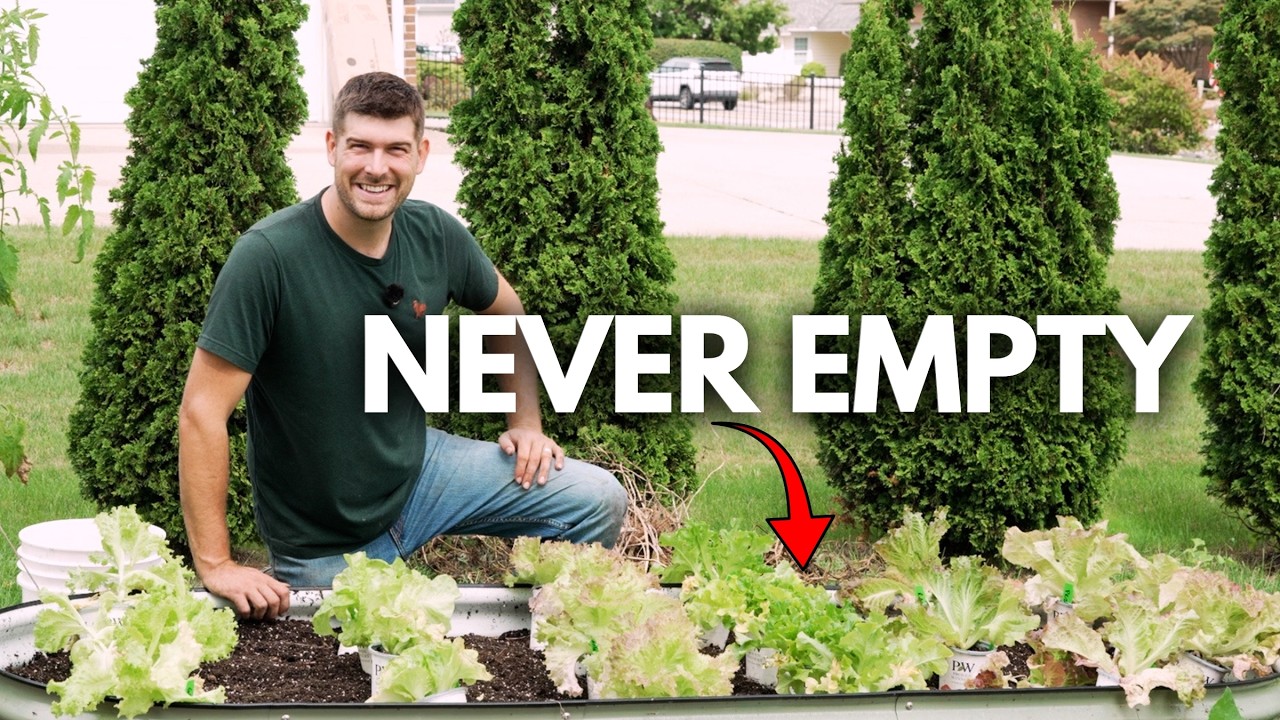
Imagine instead walking out to your garden on a cool October morning and harvesting fresh spinach and radishes from the same bed that gave you a record potato harvest just two months earlier. Imagine never having to look at an empty raised bed again, because you always have the next crop ready and waiting. That is what succession planting done right actually looks like — and it is completely achievable for any home gardener willing to plan just a few weeks ahead.
Luke from the MIgardener channel has been refining this system through years of real-world gardening in Michigan, one of the more challenging climates for extending a growing season. He has made the mistakes so you do not have to — including starting transplants too late, leaving harvest-ready crops in the ground because the next seedlings were not ready, and scrambling to figure out a plan in the moment when the planning should have happened weeks earlier. His hard-won approach is practical, flexible, and grounded in what actually works in a real backyard garden.
This PDF checklist distills everything from that video into a clear, actionable sequence you can follow right now. From re-amending your soil after a heavy-feeding crop, to timing your seed starts so transplants are always ready when a bed opens up, to building a full-season succession plan that maps crops from spring through fall — every step is here. Use it to plan your garden fire drill before the fire, not during it.
What's Inside — Preview
Every checklist item comes with actionable notes to guide you — things like "Don't forget to do this before you start," "Avoid this common mistake," or "Set a reminder for 30 days out." Nothing vague, just clear next steps.
DO
Re-amend and remineralize the soil immediately after pulling out a heavy-feeding crop
PLAN
Identify every heavy-feeding crop in your garden and schedule a soil re-amendment date for each bed after harvest
PLAN
Build your full-season succession plan at the very start of the growing season — not in the moment
PLAN
Map out a bed-by-bed crop rotation sequence using days-to-maturity as your scheduling framework
DO
Start your next succession's seedlings indoors or in pots before the current crop is finished
+ 15 more action items inside...
 ▶ Watch the source video on YouTube