Why You Need This Checklist
What if the ground beneath your feet shifted right now — would you know what to do? Most people assume earthquakes are something that happens to other people, in other places. But if you live near a fault line, a subduction zone, or anywhere along the Pacific Ring of Fire — which accounts for roughly 90% of the world's earthquakes — that assumption could cost you everything. The uncomfortable truth is that many of us are completely unprepared, and our institutions don't always have our backs.
Think about this: the Cascadia Subduction Zone, running 1,300 kilometers along the U.S. Pacific Northwest coast, is overdue for a magnitude 9 earthquake. The last one hit in 1700. That's over 300 years ago. Investigative journalist Kathryn Schultz exposed just how vulnerable the region was as recently as 2015 — no early warning system, buildings constructed before seismic codes existed, schools not stabilized for resilience. The gap between knowing the risk and actually being ready is enormous, and most people are sitting squarely in that gap.
Now picture this instead: you know exactly what to do the moment shaking starts. You've built your emergency kit, your family has a clear communication and evacuation plan, and your community has connected so that neighbors can support each other when rescue teams can't get there in time. You understand the seismic risk in your area, you've checked whether your building meets modern safety codes, and you've even downloaded the right early warning apps. That calm, confident readiness is absolutely achievable — and it doesn't require a geology degree to get there.
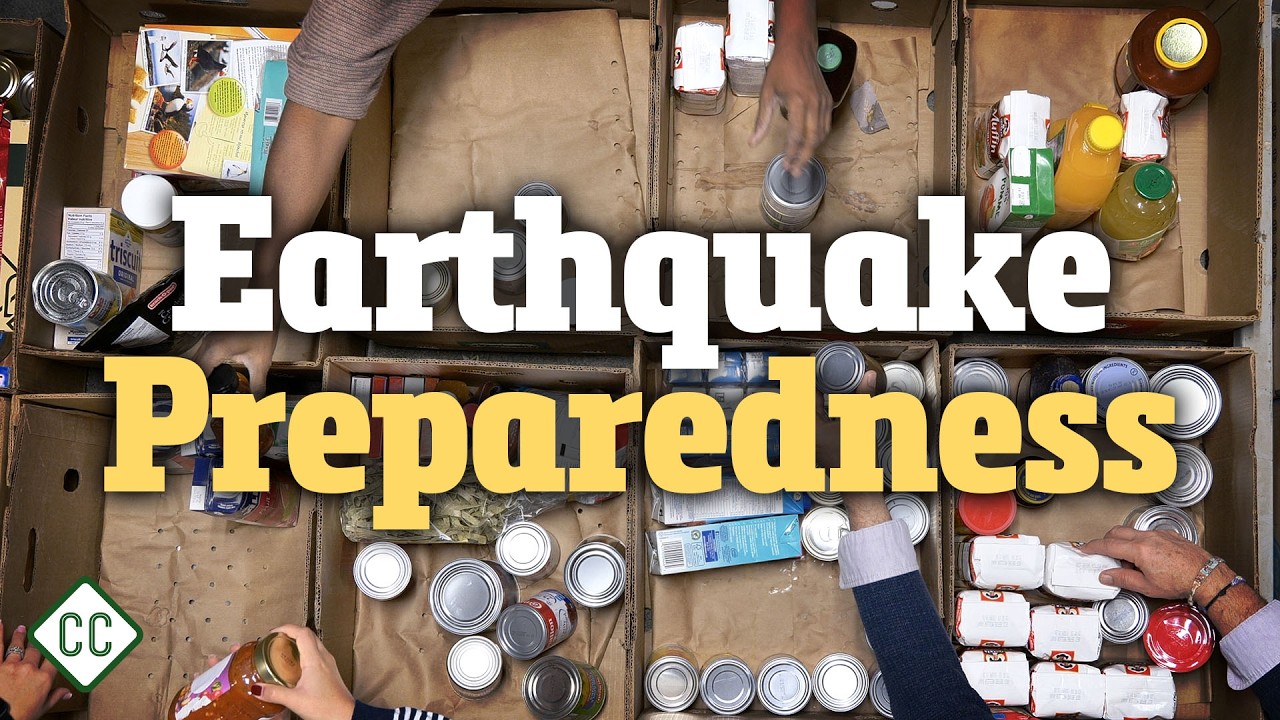
CrashCourse has built a reputation for making complex science genuinely accessible and empowering. Their Geology series, hosted by Sage, breaks down exactly what causes earthquakes, why some regions are far more vulnerable than others, and — most importantly — what real preparedness looks like at every level, from government infrastructure to your own front door. The episode draws on real-world examples including Chile's remarkable seismic culture built after the 1960 Valdivia earthquake, Japan's world-class seismic isolation engineering, and the community resilience hubs now being built in Seattle.
This checklist distills every actionable step from that episode into a clear, step-by-step action plan you can start using today. From researching your local seismic risk to building your emergency kit, practicing the Drop-Cover-Hold On protocol, connecting with community resilience networks, and advocating for better infrastructure — it's all here. Grab this checklist and take the first real step toward genuine earthquake preparedness.
What's Inside — Preview
Every checklist item comes with actionable notes to guide you — things like "Don't forget to do this before you start," "Avoid this common mistake," or "Set a reminder for 30 days out." Nothing vague, just clear next steps.
RESEARCH
Research the seismic risk level where you live and identify which fault or subduction zone is nearest to you
DOWNLOAD
Find out what earthquake early warning systems are active in your region and sign up for alerts
CHECK
Check whether your home or building was constructed before local seismic building codes were enacted
LEARN
Determine whether your building uses seismic isolation or other earthquake-resistant engineering features
RESEARCH
If you own your home and it lacks seismic retrofitting, research grant-funded retrofit programs in your county
+ 12 more action items inside...
 ▶ Watch the source video on YouTube