Why You Need This Checklist
What if the siding choice you made today could protect your home from wildfire, never need repainting for decades, and boost your property value — all without hiring a painter? That question is exactly what most homeowners never think to ask until it's too late.
Here's the frustrating reality: most people remodel their exterior with the same old materials — wood composites, vinyl, unpainted fiber cement — and end up back on a ladder five years later, paintbrush in hand, watching their investment peel and warp in the sun. If you're in a dry, high-UV, or fire-prone region, the wrong exterior choices don't just look bad — they can literally put your home at risk.
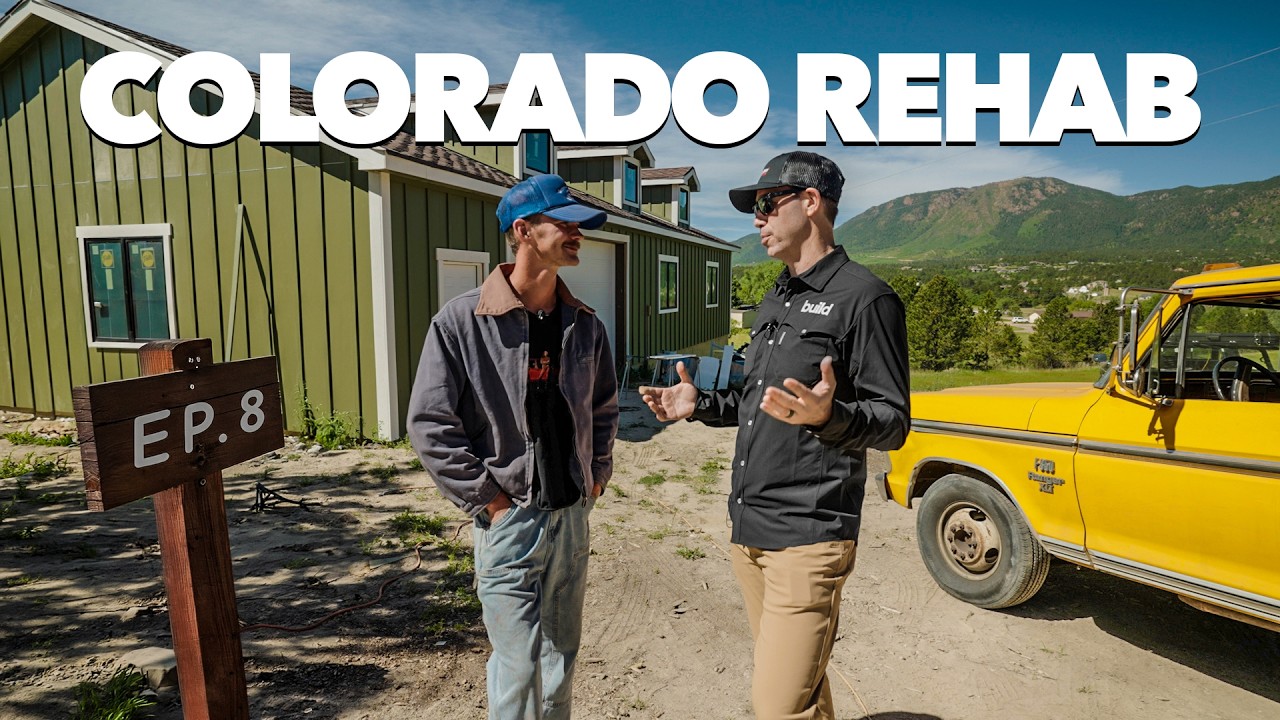
Now picture this instead: a finished exterior that looks sharp, meets wildland fire codes, resists rot, and requires nothing but the occasional rinse. No painter. No peeling. No warping deck boards. Just a house that holds its value and its beauty year after year. That's exactly what Jared Kaufman pulled off on his Colorado rehab — at 25 years old, largely doing the work himself.
Matt Risinger, one of the most trusted voices in high-performance building and the host of The Build Show, walked through every detail of this project on camera. Matt has spent decades working with James Hardie fiber cement, Azek PVC trim, and Timbertech decking systems, and he knows exactly what works in every climate zone. In this episode, he breaks down why a rain screen wasn't needed in a semi-arid 15-inch rainfall climate, how factory-painted ColorPlus siding eliminates the painter entirely, why aluminum deck framing from Timbertech is superior to pressure-treated wood in high-sun environments, and how every product choice met the strict Palmer Lake wildland urban interface fire code.
This checklist captures every actionable decision from that video — material selections, installation tips, fire code requirements, nail types, batten spacing, deck plug techniques, and more — so you can apply the same thinking to your own project without rewatching the video a dozen times.
Whether you're a DIY homeowner, a contractor, or someone planning a remodel in a fire-prone or dry climate, this PDF gives you a clear, confident path from rough shell to finished exterior. Use it as your project roadmap and stop guessing at the details that matter most.
What's Inside — Preview
Every checklist item comes with actionable notes to guide you — things like "Don't forget to do this before you start," "Avoid this common mistake," or "Set a reminder for 30 days out." Nothing vague, just clear next steps.
DECIDE
Determine your annual rainfall to decide whether a rain screen is necessary before installing fiber cement siding
RESEARCH
Check whether your property is in a Wildland Urban Interface (WUI) fire zone and understand your local fire code requirements
BUY
Select James Hardie fiber cement board-and-batten siding in the ColorPlus factory-painted finish for the exterior cladding
DO
Install the Hardie panel board-and-batten siding using 4x10 sheets run vertically, with batten strips spaced at 16 inches on center to match stud layout
DO
Touch up all exposed nail heads on the Hardie ColorPlus panels using the color-matched caulking supplied by James Hardie
+ 13 more action items inside...
 ▶ Watch the source video on YouTube