Fill Raised Beds For Almost Nothing
Use wood, branches, and organic scraps to build rich soil and slash your raised bed costs.
Based on: Fill Your Raised Beds For Almost Nothing by MIgardener
 ▶ Watch the source video on YouTube
Use wood, branches, and organic scraps to build rich soil and slash your raised bed costs.
Based on: Fill Your Raised Beds For Almost Nothing by MIgardener
▶ Watch the source video on YouTube
What if the secret to the most productive raised bed soil you've ever grown in was literally lying on the ground in your backyard right now? Most gardeners spend hundreds of dollars filling deep raised beds with bags of soil and compost, not realizing they're paying for something nature will happily build for free — if you just know how to set it up.
Here's the frustrating reality: deep raised beds can eat through soil fast, and that soil compresses, settles, and loses its structure season after season. You end up topping it off every spring, spending more money, hauling more bags, and still not getting the loose, crumbly, nutrient-rich growing medium your plants actually need. Meanwhile, that pile of branches from last fall is just rotting in the corner doing nothing for you.
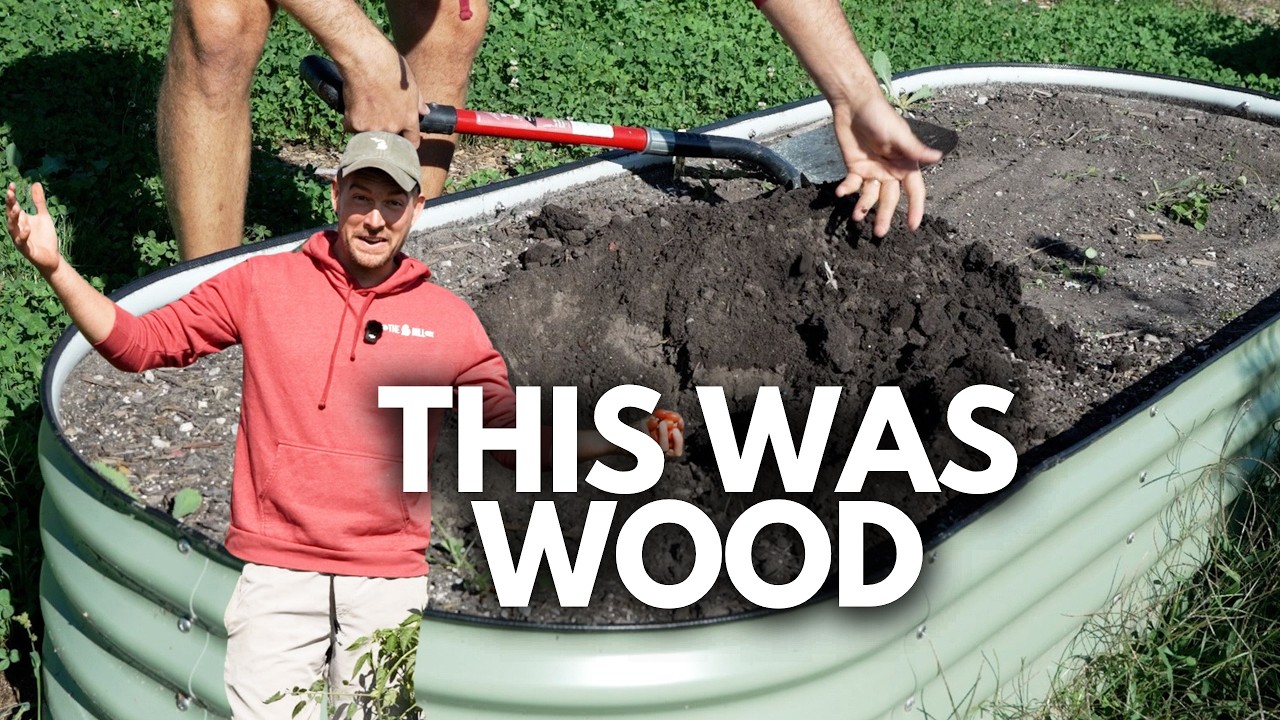
Imagine digging into your raised bed two years from now and finding nothing but dark, crumbly, absolutely stunning soil — all the way down to the clay layer. No wood fragments, no compaction, just an aerobic, living ecosystem teeming with earthworms and beneficial bacteria that have done every bit of the work for you. Your tomato plant's roots diving deep, your soil holding water longer, your plants producing more while you water less. That's not a fantasy — that's exactly what Luke from the MIgardener channel uncovered when he dug into a raised bed he had filled halfway with branches two years earlier.
Luke has been teaching home gardeners how to grow more food for less money for years, and his hands-in-the-dirt, results-first approach has built one of the most trusted gardening communities online. This isn't theory — he literally excavated the bed on camera and showed the proof: branches an inch and a half to two inches wide, completely broken down into gorgeous humus-rich soil in just two growing seasons.
This checklist walks you through every step of the Hugelkultur-style raised bed method Luke demonstrates, from choosing and layering your wood material, to understanding aerobic versus anaerobic breakdown, to knowing when and how to use trench composting to keep the cycle going without ever having to dig the whole bed up. You'll know exactly what to use, what to avoid, what to top off with, and how to amend your soil so the beneficial bacteria and fungi keep thriving year after year. Use this checklist to set up your raised beds right the first time — and let your soil do the growing.
Every checklist item comes with actionable notes to guide you — things like "Don't forget to do this before you start," "Avoid this common mistake," or "Set a reminder for 30 days out." Nothing vague, just clear next steps.
+ 13 more action items inside...
Instant PDF download. Start taking action today.
✓ Instant download · ✓ PDF format · ✓ No subscription