Why You Need This Checklist
Have you ever wondered why so many Texas homes develop moisture problems, mold issues, or sky-high energy bills even after a fresh build? The answer almost always comes down to three things: stucco done wrong, an unconditioned attic acting like an oven, and an HVAC system that was never designed to handle the real demands of a Texas climate. If you're building, renovating, or just trying to understand why your house feels wrong, this checklist is going to be one of the most useful things you read this year.
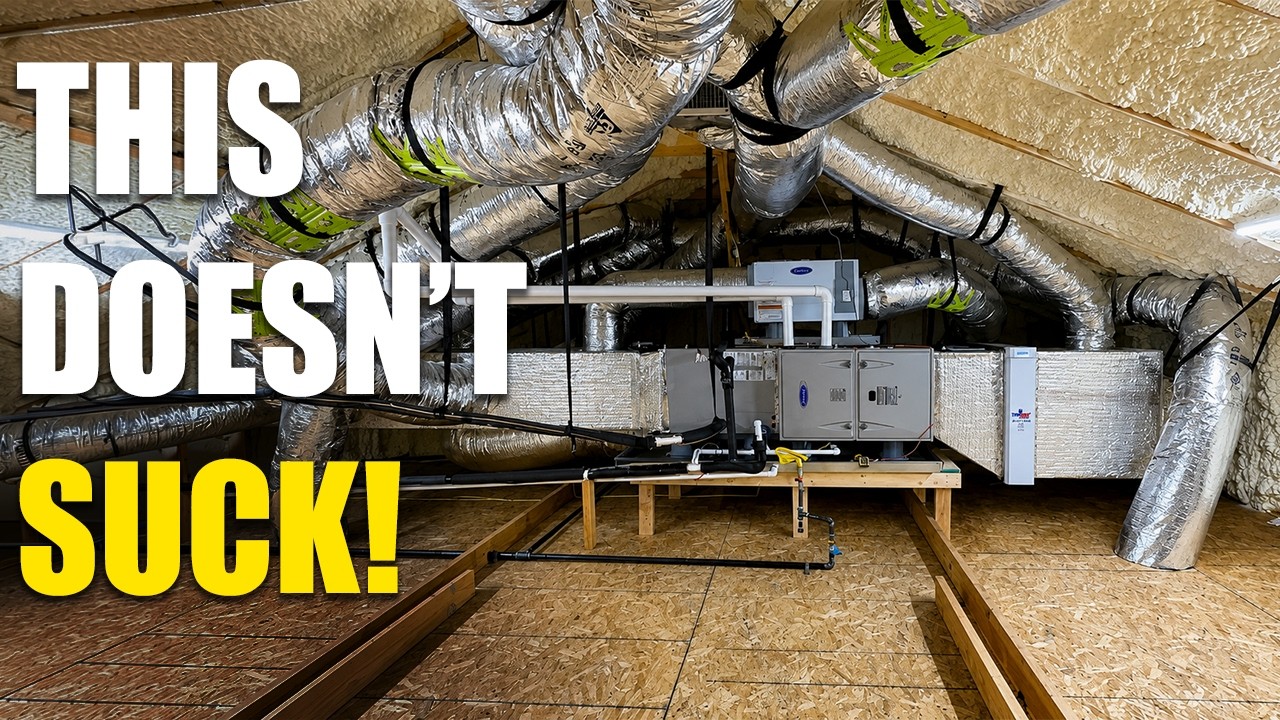
Here's the uncomfortable truth: most builders in Texas are still doing all three of these things the same way they did decades ago. They're applying stucco directly over sheathing without a proper drainage plane. They're sticking HVAC equipment in a 140-degree attic and wondering why the system runs constantly. They're sealing a house tight and then forgetting to give it any way to breathe. The result is rot you can't see, humidity you can feel, and a house that ages badly from the inside out.
Now imagine the opposite. A home where every drop of moisture that gets behind the stucco drains out before it can cause damage. An attic that stays cool, conditioned, and protected from ridge rot. A mechanical system with a whole-home dehumidifier, an ERV running 24/7, and a makeup air system so your kitchen exhaust actually works. That's a house that will still be standing and healthy in a hundred years. That's what the best builders in Dallas are doing right now, and it's completely achievable on any new build or serious renovation.
Matt Risinger has spent years on job sites across Texas and the country documenting exactly what separates high-performance homes from the ones that fail. In this video, he walks through a real Dallas build with builder Greg of Caster Homes and HVAC specialist Ken Davis of Performance Air Conditioning of Texas. Between them, they demonstrate specific products, specific installation details, and specific reasoning behind every decision. This isn't theory. This is a real house that blew an impressive 0.84 ACH50 blower door result because the team followed a disciplined process.
This checklist pulls every actionable step from that walkthrough into a clear, organized format you can take to your next job site or hand to your contractor. Work through it item by item and you'll know exactly what to specify, what to ask for, and what to refuse to accept.
What's Inside — Preview
Every checklist item comes with actionable notes to guide you — things like "Don't forget to do this before you start," "Avoid this common mistake," or "Set a reminder for 30 days out." Nothing vague, just clear next steps.
LEARN
Classify your stucco as a reservoir cladding and plan accordingly — never treat it as a weather barrier
BUY
Install a rain screen behind the stucco cladding to create a drainage and drying cavity
DO
Ensure the rain screen cavity has an open bottom for drainage and ideally an open top for stack-effect drying
BUY
Use Huber Zip System sheathing as your primary water and air barrier layer beneath the rain screen
DO
Install a temporary package HVAC unit at drywall stage to climatize the house through the rest of the build
+ 19 more action items inside...
 ▶ Watch the source video on YouTube