Why You Need This Checklist
What if your home was so well-insulated that your family slept right through a violent storm — and didn't even know a tree fell on your neighbor's car? That's not a fantasy. That's exactly what happened to a client of Matt Risinger's co-host, and it's the kind of result that changes how people feel about the homes they live in every single day.
Here's the uncomfortable truth most builders and homeowners never think about: standard stud-cavity construction without interior insulation is basically a hollow drum. Sound travels freely between floors, between rooms, and from the outside world right into your bedroom. Worse, those same empty cavities become fire highways — giving flames a direct path through your walls and floors before anyone even smells smoke. If you have engineered I-joists with OSB webs in your floor system, or a finished basement where the teenagers like to party, or a garage where an electric vehicle charges overnight, the stakes are even higher than you might realize.
Imagine instead a home where the basement bar doesn't wake the people sleeping upstairs. Where a metal roof in a thunderstorm sounds like a library. Where a garage fire involving an electric vehicle gives your family a full two hours to safely evacuate rather than minutes. Where wildfire embers landing behind your rain screen simply die out instead of igniting a hidden blaze inside your walls. That's the kind of home Matt Risinger and his collaborators build — and it's entirely achievable with the right insulation strategy applied in the right places.
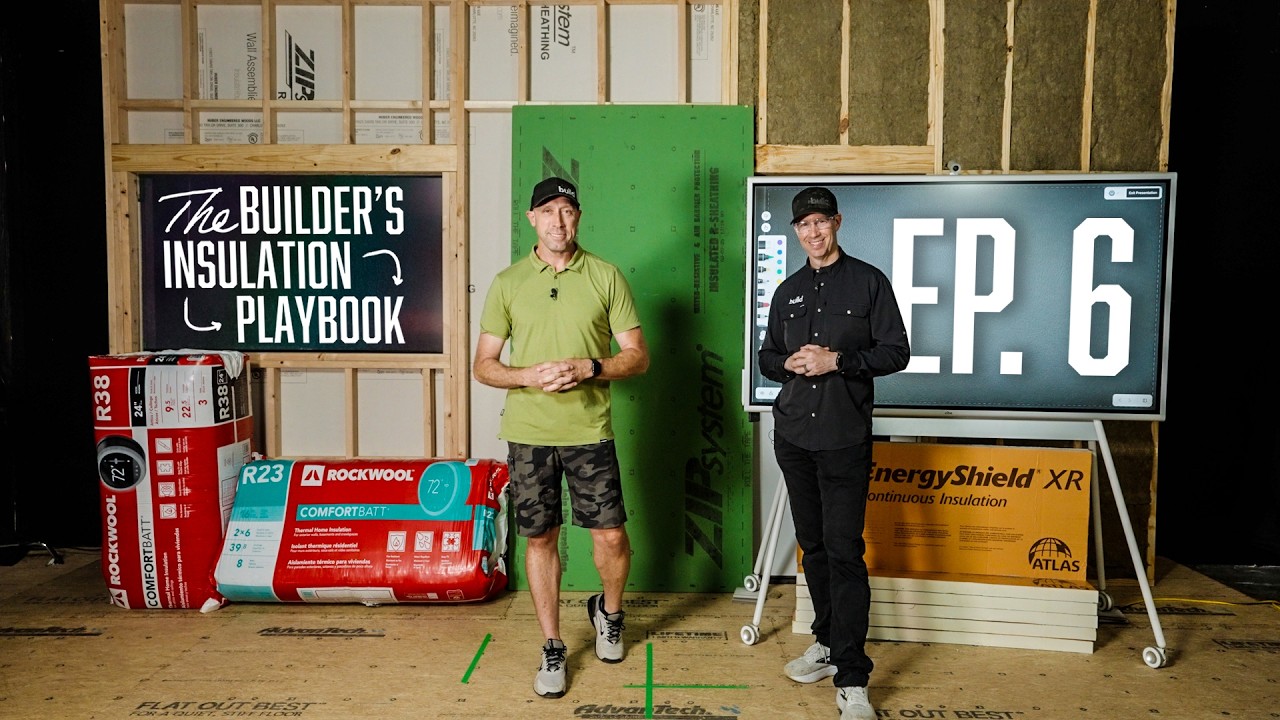
Matt Risinger has spent decades building high-performance homes and documenting exactly what works on his Build Show Network. His Builder's Insulation Playbook series breaks down complex building science into practical, field-tested guidance that seasoned contractors and first-time builders alike can actually use. The products and techniques discussed in this episode — including Rockwool Safe and Sound, Comfort Bat, and Comfort Board — are not theoretical. They've been tested on real job sites, in finished basements, in WOOI-zone builds, and in homes with garages housing electric vehicles.
This checklist turns the full content of Episode 6 into a clear, actionable sequence you can follow from planning through installation. Whether you're insulating interior walls for sound, mid-floor assemblies for acoustic comfort, or garage assemblies for maximum fire resistance, every step is here. Use it on your next project and give your clients the kind of home they'll talk about for years.
What's Inside — Preview
Every checklist item comes with actionable notes to guide you — things like "Don't forget to do this before you start," "Avoid this common mistake," or "Set a reminder for 30 days out." Nothing vague, just clear next steps.
DECIDE
Decide to use insulation for acoustic and fire benefits — not just thermal performance — as a deliberate design goal on every project
BUY
Spec Rockwool Safe and Sound batts for all interior partition walls where sound isolation or fire resistance is a priority
DO
Install Rockwool Safe and Sound batts in all interior stud-bay cavities where sound transfer between rooms is a concern
PLAN
Identify all mid-floor assemblies between living levels — especially finished basements below main living areas — and plan full-cavity insulation there
DO
Install Rockwool batts (Safe and Sound or Comfort Bat) in all mid-floor joist bays between finished levels to isolate sound transfer floor to floor
+ 15 more action items inside...
 ▶ Watch the source video on YouTube