Why You Need This Checklist
Have you ever walked away from a conversation completely convinced you had someone figured out — only to discover later you had them completely wrong? You are not bad at reading people. You are just using the wrong signals, and nobody ever told you which ones actually work.
Here is what makes this so frustrating: your brain is doing the reading automatically, in about a tenth of a second, whether you like it or not. It scans a face, fires a verdict, and then quietly buries all the evidence that contradicts it. You trust the gut feeling. You file the person away. And weeks later, when they surprise you, you call it unexpected — when really, you just never saw past the cover.
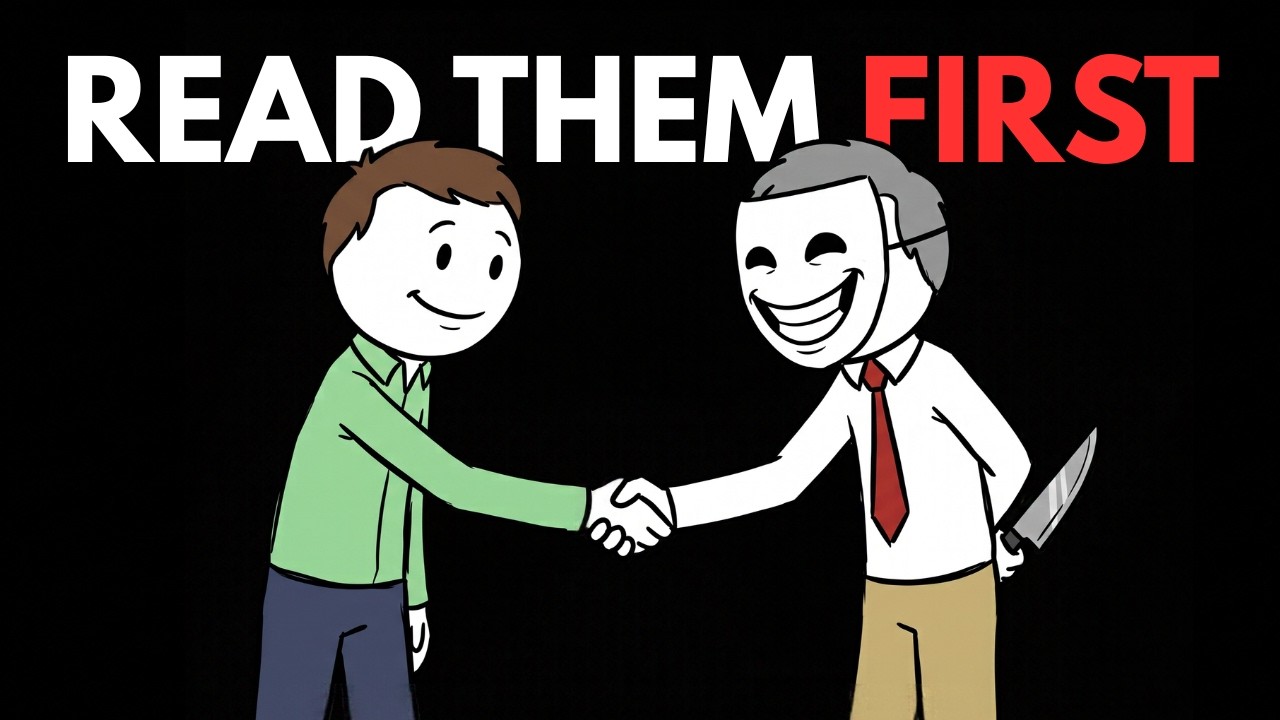
Most advice makes this worse. Crossed arms mean defensive. Eyes drifting left mean lying. Firm handshake means confidence. You have heard the cheat sheet. Researchers have actually tested those rules, and the results are humbling — people using them perform no better than chance, and sometimes worse. The code was never real. And every time you think you have decoded someone, you stop actually listening to them.
Now imagine something different. Imagine sitting across from a new colleague, a date, or a difficult boss and knowing exactly where to look — not at their face, but at the three places people genuinely leave the truth about themselves. Imagine catching what the voice reveals when the face is saying fine. Reading the behavioral residue in someone's space the way a detective reads a crime scene. Watching the same person in three different moments and suddenly seeing their pattern — not who they perform, but who they actually are under pressure, in victory, and when nobody important is watching.
That is the framework PsychToons breaks down in their video on the psychology of social intelligence, built on real research from psychologists at Princeton, Yale, UC Riverside, and the University of Texas. This is not pop psychology. These are peer-reviewed findings on how accurate reads actually happen — and where they almost always fall apart.
This checklist distills every principle and action step from that video into a clean, printable PDF you can work through at your own pace. It walks you through the three most common misreads, the four-link chain of accurate perception, and the three evidence-based principles for reading anyone quickly and correctly. Use it before a job interview, a first date, a new hire, or any situation where understanding people actually matters. Get your copy and start seeing past the cover.
What's Inside — Preview
Every checklist item comes with actionable notes to guide you — things like "Don't forget to do this before you start," "Avoid this common mistake," or "Set a reminder for 30 days out." Nothing vague, just clear next steps.
LEARN
Acknowledge that your instant read of people is automatic and unavoidable — accept it as a starting guess, not a verdict
LEARN
Learn the four-link chain of accurate perception from David Funder's Realistic Accuracy Model
CHECK
Identify which link in Funder's chain most often breaks for you in real situations
AVOID
Stop making Misread One — avoid treating a facial impression as meaningful character data
AVOID
Stop making Misread Two — discard body language cheat sheets as unreliable decision tools
+ 15 more action items inside...
 ▶ Watch the source video on YouTube