Why You Need This Checklist
What if the biggest threats to your home — mold, rot, energy loss, and structural failure — were all hiding behind decisions made during framing? Most homeowners and even many builders never find out until it's too late, and the repairs cost tens of thousands of dollars. That's the uncomfortable truth that Matt Risinger and his Build Show Network have been exposing for years.
Here's what's really happening on job sites every day: moisture gets trapped behind reservoir claddings like stone because nobody added a proper rain screen gap. Ductwork bakes in 150-degree unconditioned attics, sweating condensation onto sheetrock and breeding mold you'll never see until someone gets sick. Steel beams create thermal bridges that show up red-hot on thermal cameras — and cold enough on the inside to cause wall cavity sweating. Air barriers get broken at every porch ceiling, garage nook, and window rough opening because the detail got missed in the rush to frame. These are not rare mistakes. They are standard practice on thousands of homes being built right now.
Now picture the alternative. A home so tight and well-detailed that it functions like a Yeti cooler — holding conditioned air in, keeping heat and moisture out, and breathing clean filtered air through an ERV system that works like healthy lungs. No mold on the coils. No cracks in the sheetrock from a sagging roof. No squeaky stairs. No thermal loss bleeding through steel beams. Just a home that performs for decades and never calls you back with expensive problems.
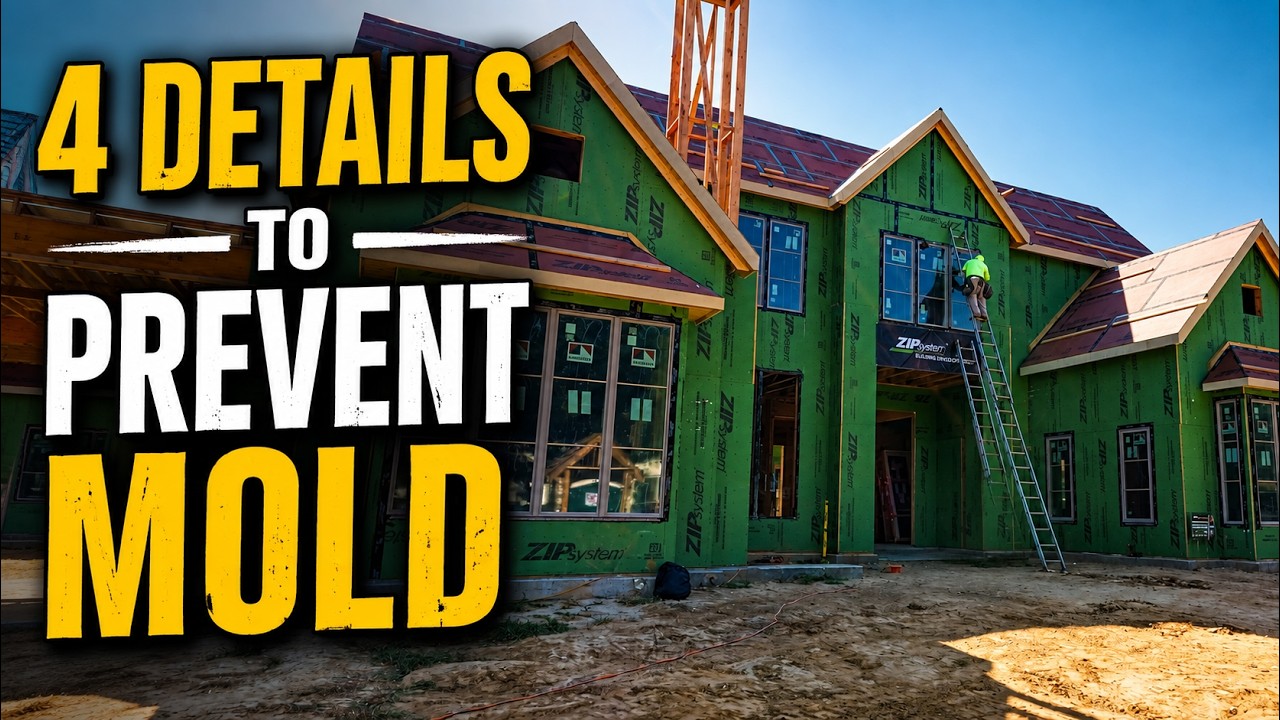
This is exactly what Isaac of Providential Homes is building in Dallas, Texas, and Richie Brown walked the job site so you could see every hidden detail up close. These are second-generation builders who have refined these systems through real-world experience — not theory. They show you the products, the taping sequences, the flashing steps, the beam choices, and the mechanical decisions that separate a high-performance home from a code-minimum box.
This checklist puts every one of those actionable steps in your hands right now. Whether you're a builder, a contractor, or a homeowner managing a custom build, you can use this guide to verify the right details are happening at the right time. Work through each step in sequence, share it with your trades, and know that the hidden details — the ones that prevent mold, rot, and energy failure for decades — are all accounted for. Start using it on your next project today.
What's Inside — Preview
Every checklist item comes with actionable notes to guide you — things like "Don't forget to do this before you start," "Avoid this common mistake," or "Set a reminder for 30 days out." Nothing vague, just clear next steps.
BUILD
Install Zip R3 sheathing on exterior walls as your primary sheathing and air barrier substrate
DO
Use Zip stretch tape at all window rough openings before installing windows
DO
Tape window rough openings so the tape wraps from the exterior sheathing to the interior framing, maintaining air barrier continuity
DO
Apply Siga Fentrum 430 tape on the brick ledge flashing from the ledge up the sheathing before stone or brick installation
DO
Install foundation tape and through-wall flashing at the base of all window openings so water drains out to the ground
+ 18 more action items inside...
 ▶ Watch the source video on YouTube