Why You Need This Checklist
What if the email from your hospital was actually designed to steal your identity? That is not a hypothetical. Right now, patients across the country are receiving messages that look exactly like official MyChart communications, and thousands of people are one click away from handing scammers access to their most sensitive medical, financial, and personal information. If you or someone you love uses MyChart, you need to read this carefully.
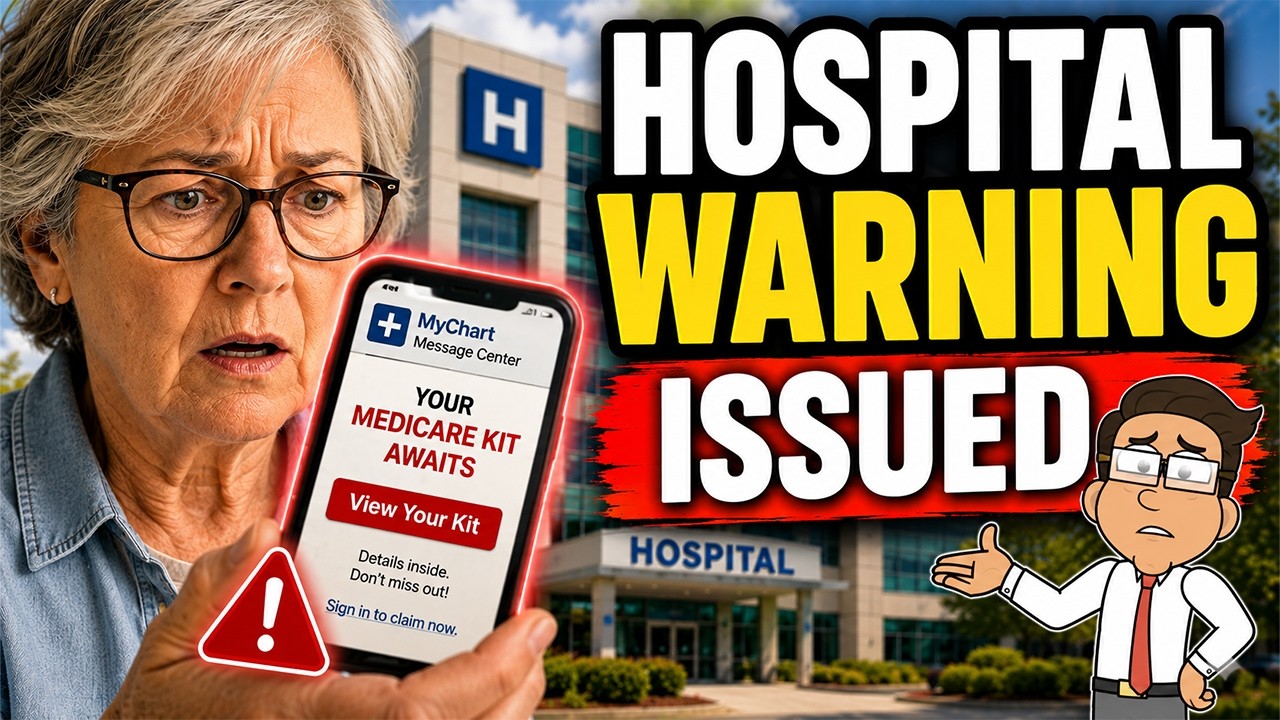
Here is what makes this scam especially dangerous: it exploits trust you have already built. You recognize the MyChart name. You are used to getting health notifications. You might be on Medicare and assume a Medicare kit offer is routine. That familiarity is precisely what scammers are counting on. At least seven major health systems have already issued warnings, and the fraudulent messages keep coming. ECU Health and Centara Health both flagged emails with the subject line 'Your MyChart Medicare kit awaits.' These messages contain malicious links designed to steal your login credentials, financial details, and sensitive personal information. And the tactics keep evolving, so the next version might mention a lab result, an insurance update, a refund, or a free gift.
Imagine instead feeling completely confident every time a message arrives that looks like it came from your hospital. You know exactly what to look for, what to ignore, and what steps to take if something seems off. You know how to check your account safely, how to secure it against future attacks, and what to do if you have already clicked something suspicious. That peace of mind is not complicated to achieve, but it does require knowing the right steps in the right order.
Money Instructor has built a reputation for breaking down exactly these kinds of financial and consumer safety threats in plain, practical language. This video drew on reporting from Becker's Hospital Review, direct warnings from multiple health systems, and official guidance from Epic, the company behind MyChart, to give you a complete and accurate picture of what is happening and what to do about it.
This checklist turns all of that guidance into a clear, step-by-step action plan you can follow right now. It covers how to recognize a fraudulent message, how to log in safely, how to secure your account, and exactly what to do if you have already interacted with a suspicious email or text. Print it out, save it, and share it with anyone on Medicare who might see a Medicare kit offer and assume it is real. A few extra seconds and the right checklist can protect your medical privacy, your account access, and your money.
What's Inside — Preview
Every checklist item comes with actionable notes to guide you — things like "Don't forget to do this before you start," "Avoid this common mistake," or "Set a reminder for 30 days out." Nothing vague, just clear next steps.
LEARN
Learn the exact scam: recognize emails or texts offering a 'MyChart Medicare kit' or 'senior health package'
LEARN
Understand that MyChart itself is not compromised — scammers are misusing its name and logo, not exploiting a security flaw
LEARN
Know all the disguises this scam may use so you are not caught off guard by future variations
AVOID
Never use a link inside an unexpected email or text to sign into MyChart or provide any information
AVOID
Do not click the unsubscribe button inside a suspicious email
+ 20 more action items inside...
 ▶ Watch the source video on YouTube