Stop Overpaying: Compare Loans the Smart Way
Master the four loan factors that reveal the true cost of any borrowing offer
Based on: Why a Lower Interest Rate Can Cost You More by Money Instructor
 ▶ Watch the source video on YouTube
Master the four loan factors that reveal the true cost of any borrowing offer
Based on: Why a Lower Interest Rate Can Cost You More by Money Instructor
▶ Watch the source video on YouTube
What if the loan with the lower interest rate was actually costing you more money? It sounds impossible, but it happens to borrowers every single day, and most people never even realize it. They see a smaller percentage, assume they won the negotiation, and sign on the dotted line without ever checking the number that actually matters: what they will pay in total before the debt is gone.
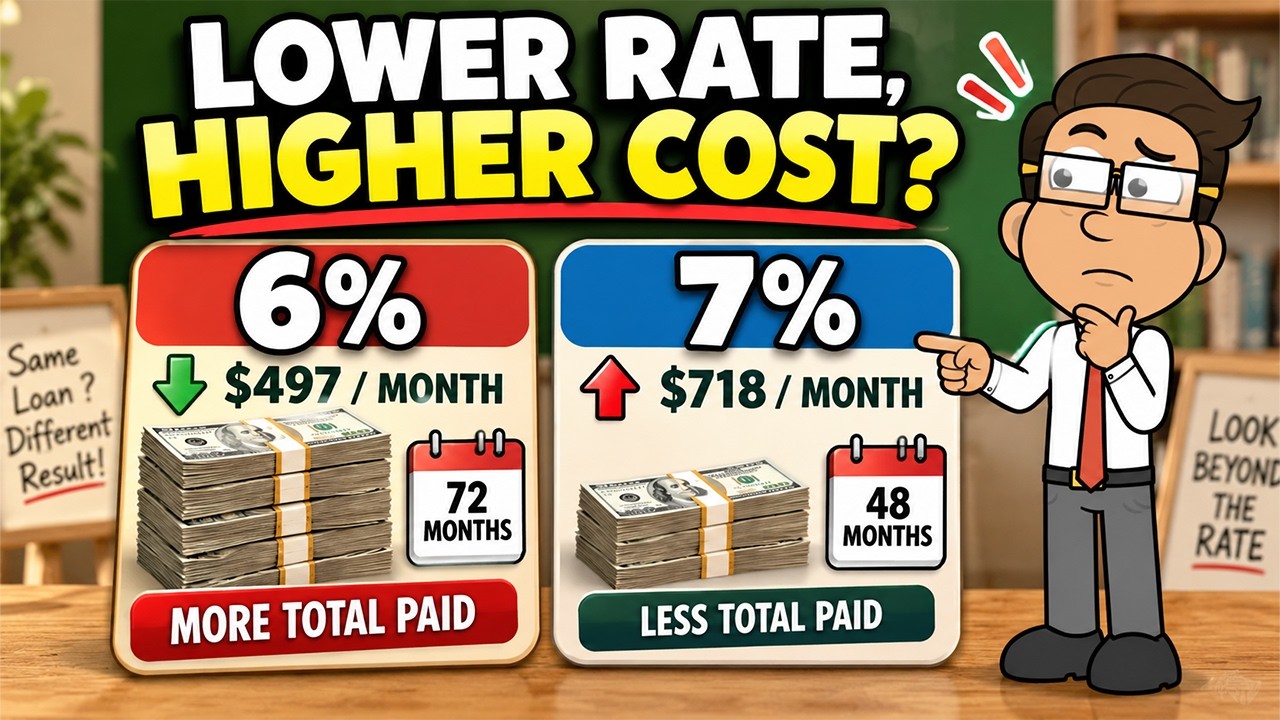
Here is the problem. Lenders know that most people look at one number: the monthly payment or the interest rate. So they adjust the term, bury fees in the fine print, or structure the deal in a way that looks attractive on the surface but quietly drains your wallet over time. A $30,000 car loan at 6% over six years costs roughly $1,300 more in interest than the same loan at 7% over four years. A personal loan with a 9% rate and a 6% origination fee can leave you paying more per month and more overall than a 10% loan with no fee. These are not edge cases. This is how loan pricing actually works.
Imagine sitting across from any lender, any time, and knowing exactly how to strip away the marketing language and see the real cost of what they are offering. You compare APR to APR instead of mixing metrics. You calculate the break-even point on mortgage discount points before spending thousands upfront. You check what is actually rolled into the loan balance before celebrating a low rate on a car. You know when a longer term erases every dollar you thought you were saving. That clarity changes everything, and it is available to anyone willing to learn four simple things to compare.
Money Instructor has built a reputation for making financial concepts genuinely useful, not just technically accurate. This channel takes the kind of math that used to live inside bank training manuals and turns it into something any borrower can act on. The loan comparison framework in this video is one of the most practical things you will find anywhere on personal finance.
This checklist puts every step of that framework in your hands. It walks you through comparing interest rates and APR correctly, calculating origination fee impact, evaluating mortgage discount points with a break-even approach, stress-testing adjustable rate risks, and building a full side-by-side comparison before you commit to anything. Use it the next time you shop for a car loan, personal loan, or mortgage, and you will never again mistake a lower rate for a cheaper deal.
Every checklist item comes with actionable notes to guide you — things like "Don't forget to do this before you start," "Avoid this common mistake," or "Set a reminder for 30 days out." Nothing vague, just clear next steps.
+ 15 more action items inside...
Instant PDF download. Start taking action today.
✓ Instant download · ✓ PDF format · ✓ No subscription