Why You Need This Checklist
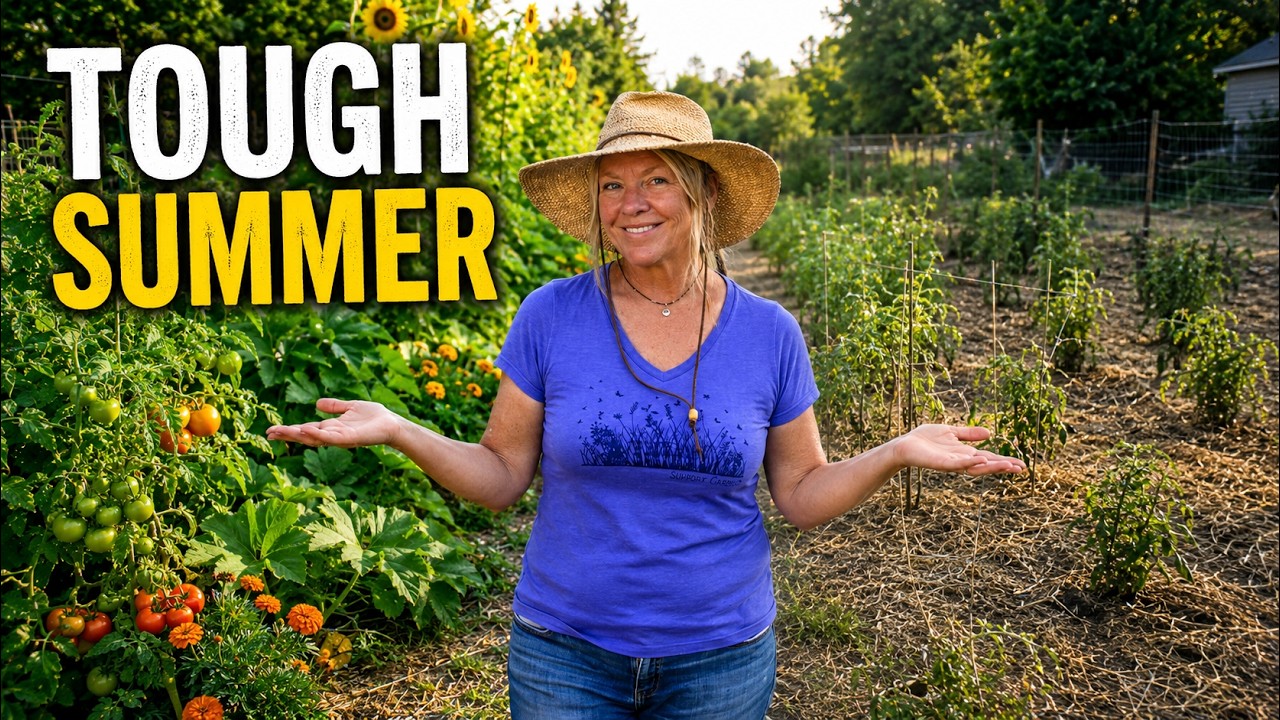
What happens when the hottest summer in memory collides with late planting, two weeks of no irrigation water, and relentless grasshoppers — and your garden still produces? That is exactly what Ali from Ali's Organic Garden and Homestead lived through, and her garden did not just survive. Parts of it thrived in ways that genuinely surprised her.
If you have ever watched a heat wave roll in and felt that sinking dread — wondering if everything you planted is about to fry — you already know how brutal a bad growing season can feel. Cracked tomatoes, scorched raspberries, pest pressure, dried-out soil, water shutoffs at the worst possible moment. When the heat hits 108 degrees and the irrigation shuts off for two weeks, most gardens do not come back from that. Most gardeners feel helpless.
But here is what changes everything: the right moves made before the crisis. Overwintering your peppers so they are already producing when neighbors are just transplanting seedlings. Laying thick mulch before the drought hits so your soil stays moist, crumbly, and full of earthworms even after weeks without rain. Planting late on purpose to sidestep pest cycles like the beet leafhopper that wiped out tomato crops across Ali's region. Choosing heat-tolerant varieties like Better Bush tomatoes and Japanese Black Trifele that keep performing when other varieties quit. These are not guesses. These are the specific decisions Ali made — and documented — that kept her farm stand stocked and her freezer full through one of the hardest growing seasons she has ever faced.
Ali is not a hobbyist. She runs a homestead, a greenhouse, goats, a farm stand, and a full organic garden in the demanding desert climate of southern Utah, where bare soil and high heat are a constant battle. Her advice comes from years of observation, honest failure, and hard-won seasonal knowledge. She tracks what works, what does not, and why — and she shares it all without sugarcoating.
This checklist distills every actionable step from that video into one clean, printable PDF you can take straight to your garden. Whether you are heading into a hot season, already in the middle of one, or planning next year's grow so you do not repeat this year's mistakes, this checklist gives you a clear sequence to follow. Every step is grounded in what Ali actually did, with the specific varieties, techniques, timing, and products she used. No fluff, no filler — just the actions that kept one desert homestead growing when everything was working against it.
What's Inside — Preview
Every checklist item comes with actionable notes to guide you — things like "Don't forget to do this before you start," "Avoid this common mistake," or "Set a reminder for 30 days out." Nothing vague, just clear next steps.
DO
Overwinter your pepper plants each fall before the first frost
PLAN
Plant overwintered peppers out after last frost to gain a 6-week production advantage
DO
Practice dense planting to create a natural protective canopy over your soil
DO
Mulch any bare soil areas immediately with a thick layer of organic material
CHECK
Verify your mulched soil is retaining moisture and supporting earthworm activity
+ 29 more action items inside...
 ▶ Watch the source video on YouTube