Why You Need This Checklist
What if the most valuable parts of your steer are the ones most people throw away? Most home butchers spend days processing steaks and roasts, then toss the bones, fat trimmings, and odd cuts in the trash — or at best, hand them to the dog. But those scraps represent hours of rich broth, jars of shelf-stable tallow, freeze-dried vegetables, and even a cut of beef bacon you have probably never tried before. Sound worth saving? It absolutely is.
Here is the problem: processing a whole animal is already exhausting. By the time the steaks are wrapped and in the freezer, most people have no energy left to deal with the bones sitting in a bucket or the suet piled on the counter. So the fat goes rancid, the bones get wasted, and that beautiful brisket-style cut never becomes the beef bacon it was meant to be. It is not a knowledge problem — it is a system problem. Without a clear sequence, the secondary processing never happens.
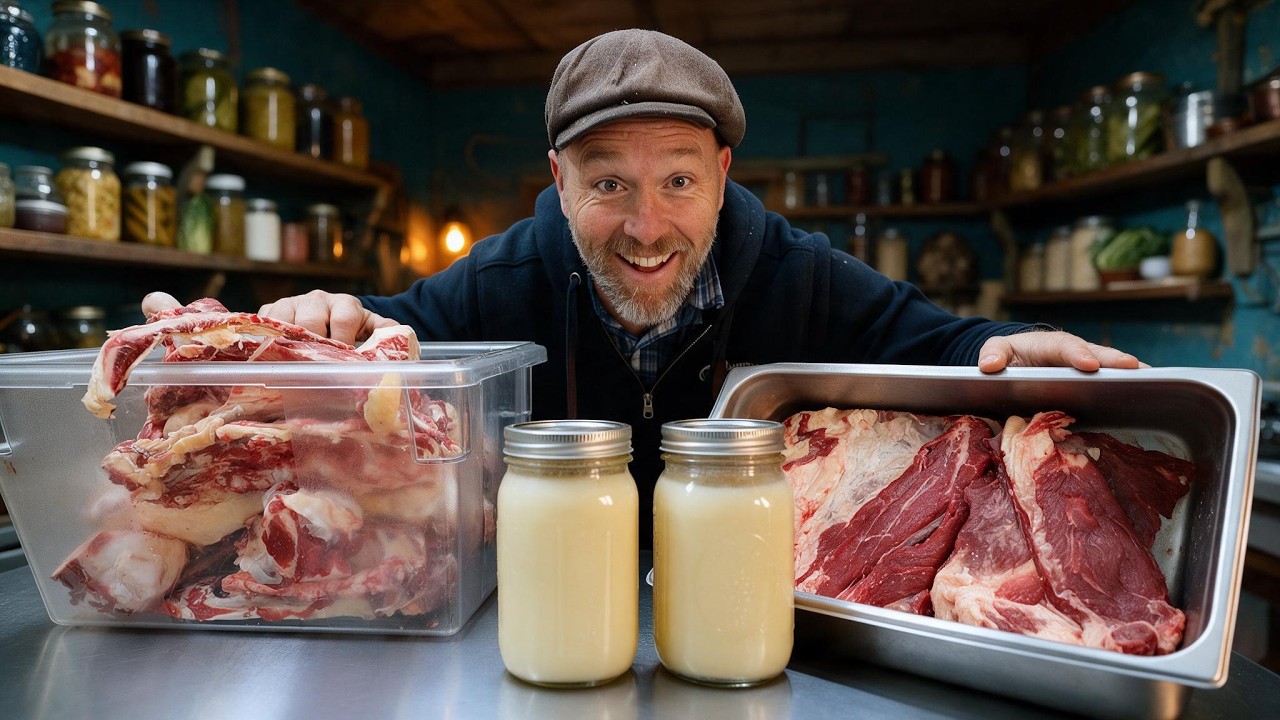
Imagine opening your freezer and seeing neatly packaged marrow bones and knuckles sorted by variety, ready for a batch of deep golden broth any time you want it. Picture jars of creamy white tallow on your counter — a skin-safe, shelf-stable fat that costs nothing extra when you raise your own beef. Add a vacuum-sealed slab of beef bacon curing in the fridge for a cold smoke seven days from now, and freeze-dried onions and garlic already diced and bagged for camping trips and quick weeknight meals. That is what a zero-waste steer processing day actually looks like.
Justin Rhodes of the Justin Rhodes channel has built one of the most trusted homesteading communities on YouTube by doing exactly this kind of work on camera, without shortcuts or fluff. In this video, Justin and his family process every secondary product from their steer in a single day — bones into broth, suet into tallow, scraps routed to pigs and chickens, and a first-ever attempt at beef bacon. The result is a practical, farm-tested workflow that any homesteader can follow.
This checklist captures every actionable step from that video in the exact order Justin works through it. From sorting bones by variety to knowing when your tallow is fully rendered — no steam means it is ready — to the precise cure weight for beef bacon and the freeze dryer timing for onions and garlic, everything is here. Use this PDF on processing day and you will not miss a single product from your animal.
What's Inside — Preview
Every checklist item comes with actionable notes to guide you — things like "Don't forget to do this before you start," "Avoid this common mistake," or "Set a reminder for 30 days out." Nothing vague, just clear next steps.
DECIDE
Sort and allocate meat scraps before processing begins
BUILD
Secure pig panels before releasing scraps to pigs
DO
Feed meat scraps to pigs, chickens, and dog
CHECK
Check on any active freeze drying before starting bone processing
DO
Cut beef bones into manageable pieces and sort by type
+ 20 more action items inside...
 ▶ Watch the source video on YouTube